Association of Research Libraries and California Digital Library Receive Grant to Advance Data Management and Sharing

Cross-posted from ARL News and written by Cynthia Hudson-Vitale | cvitale@arl.org | August 4, 2023

image by Markus Spiske on Unsplash

The Association of Research Libraries (ARL) and the California Digital Library (CDL) have received a $668,048 National Leadership Grant from the US Institute of Museum and Library Services (IMLS) to assist institutions in managing and sharing federally funded research data. This project will build a machine-actionable data-management plan (maDMP) tool by enhancing and developing new DMPTool features utilizing persistent identifiers (PIDs). CDL and ARL will work together to further strengthen institutional capacity for tracking research outputs by piloting the institutional integration of maDMPs across an academic campus and building community across institutions for maDMPs.

The promise of the maDMP is to be a vehicle for reporting on the intentions and outcomes of a research project that enables information exchange across relevant stakeholders and systems. maDMPs contain an inventory of key information about a project and its outputs with a change history that stakeholders can query for updated information about the project over its lifetime. By incorporating open persistent identifiers (PIDs) into DMPs and leveraging all DMP metadata for interoperability across infrastructures, institutions—and specifically libraries—will be better equipped to track and manage their institutional research data products.

CDL and ARL have collaborated before on advancing PIDs and maDMPs, including joint efforts on the 2019 National Science Foundation (NSF) grant Implementing Effective Data Practices that led to stakeholder recommendations for collaborative research support. The new IMLS project builds on this prior work by piloting maDMP workflows in the DMPTool, gathering feedback from partner institutions, and iterating on maDMP features to put those recommendations into practice at scale.

“We are thrilled to work with ARL on this timely project to advance open science by utilizing machine-actionable DMPs,” said Günter Waibel, associate vice provost and executive director, California Digital Library. “Facilitating the sharing and tracking of research data furthers our goals of supporting open scholarship and leveraging innovative technology to situate research data within an open knowledge graph of scholarly activity. We look forward to collaborating with ARL and partner institutions to build new tools and workflows to strengthen the research data ecosystem.”

“ARL is eager to engage its members and the broader research library community in testing new DMPTool features to improve cross-institution communications around open-science practices and research integrity,” said Mary Lee Kennedy, executive director, Association of Research Libraries.

In addition to developing DMPTool workflows to link research outputs and track relationships, this project will also work with four institutions to pilot the new features and improve capabilities. The call for institutional teams will be distributed in the next few months. Stay tuned for information on community calls and other project updates.

About the Association of Research Libraries

The Association of Research Libraries (ARL) is a nonprofit organization of research libraries in Canada and the US whose vision is to create a trusted, equitable, and inclusive research and learning ecosystem and prepare library leaders to advance this work in strategic partnership with member libraries and other organizations worldwide. ARL’s mission is to empower and advocate for research libraries and archives to shape, influence, and implement institutional, national, and international policy. ARL develops the next generation of leaders and enables strategic cooperation among partner institutions to benefit scholarship and society. ARL is on the web at ARL.org.

About the California Digital Library

The University of California (UC) founded the CDL in 1997 to take advantage of emerging technologies that were transforming the way digital information was being published and accessed. Since then, in collaboration with the UC libraries and other partners, we assembled one of the world’s largest digital research libraries and changed the ways that faculty, students, and researchers discover and access information. In partnership with the UC libraries, the CDL has continually broken new ground by developing systems linking our users to the vast print and online collections within UC and beyond. Building on the foundations of the Melvyl Catalog, we developed one of the largest online library catalogs in the country. We saved the university millions of dollars by facilitating the co-investment and sharing of materials and services used by libraries across the UC system. We work in partnership with campuses to bring the treasures of our libraries, museums, and cultural heritage organizations to the world. And we continue to explore how services such as digital curation, scholarly publishing, archiving, and preservation support research throughout the information life cycle. Serving the UC libraries is a vital component of our mission. Our unique position within the university allows us to provide the infrastructure and support commonly needed by the campus libraries, freeing them to focus their resources on the needs of their users. Looking ahead, the CDL will continue to use innovative technology to connect content and communities in ways that enhance teaching, learning, and research. CDL is on the web at cdlib.org.

About the Institute of Museum and Library Services
The Institute of Museum and Library Services is the primary source of federal support for the nation’s libraries and museums. We advance, support, and empower America’s museums, libraries, and related organizations through grantmaking, research, and policy development. IMLS envisions a nation where individuals and communities have access to museums and libraries to learn from and be inspired by the trusted information, ideas, and stories they contain about our diverse natural and cultural heritage. To learn more, visit www.imls.gov and follow us on Facebook and Twitter.

.
Supporting the FDP NIH Data Management and Sharing Pilot Project

The FDP (Federal Demonstration Partnership) NIH Data Management and Sharing Pilot Project aims to simplify the process of creating an NIH DMSP. The Pilot is testing the effectiveness and usability of two distinct templates.

The goal of the FDP pilot project is not only to test the two templates but also to gather data from both the researcher’s perspective and that of the NIH program. Feedback from these two perspectives will be instrumental in refining the templates based on the pilot data.

DMPTool supports researchers in fulfilling data management requirements efficiently and effectively. In light of this, we have developed templates based on the two FDP pilot templates, Alpha and Bravo. These templates follow the same design principles as the two FDP pilot templates, making it easier for researchers to navigate and comply with the requirements of their respective projects.

DMPTool administrators can customize the FDP templates like other DMPTool templates, including adding custom guidance and example answers and customization of the Research Outputs tab

We are proud to support the FDP NIH Pilot Project and aid researchers in creating comprehensive NIH DMSPs that foster open science. As always, feel free to contact us with any questions or feedback. 

Template Customization for the Research Outputs Tab

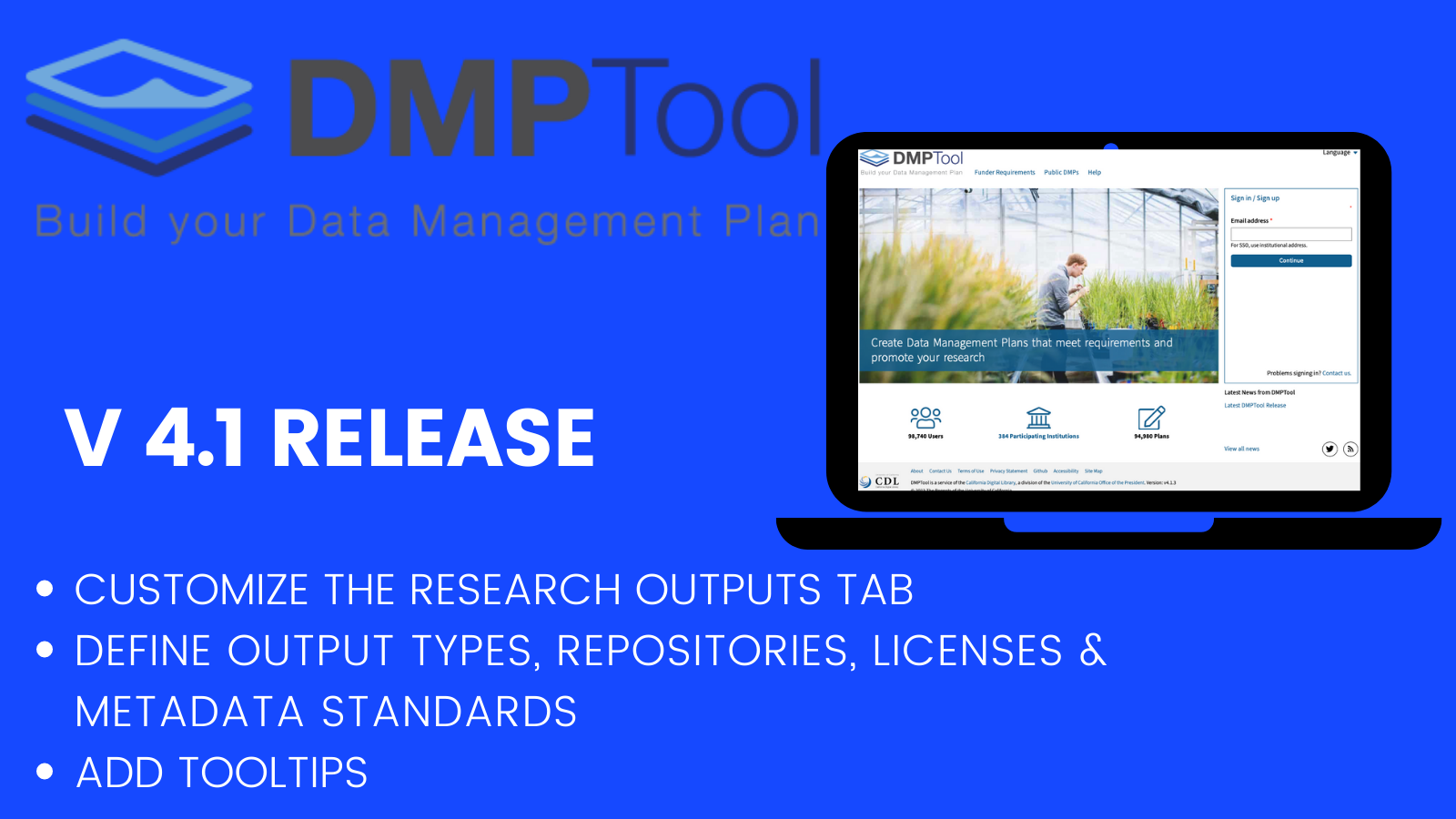
V 4.1 RELEASE
customize the RESEARCH OUTPUTS tab
Define output types, repositories, licenses & metadata standards
add tooltips

We are pleased to announce the latest DMPTool release, which introduces a new feature set focused on template customization. This update includes a “Preferences” tab in the Template Builder, offering administrators enhanced control over the Research Outputs section of the DMPTool. Documentation on this release is available here, and our full release notes are here

Here’s an overview of the features included in this update:

1. Customize Research Output Types: The Research Outputs tab traditionally offers a standard list of output types. To provide more flexibility, we’ve added the ability for administrators to customize this list based on the needs of their specific research areas.

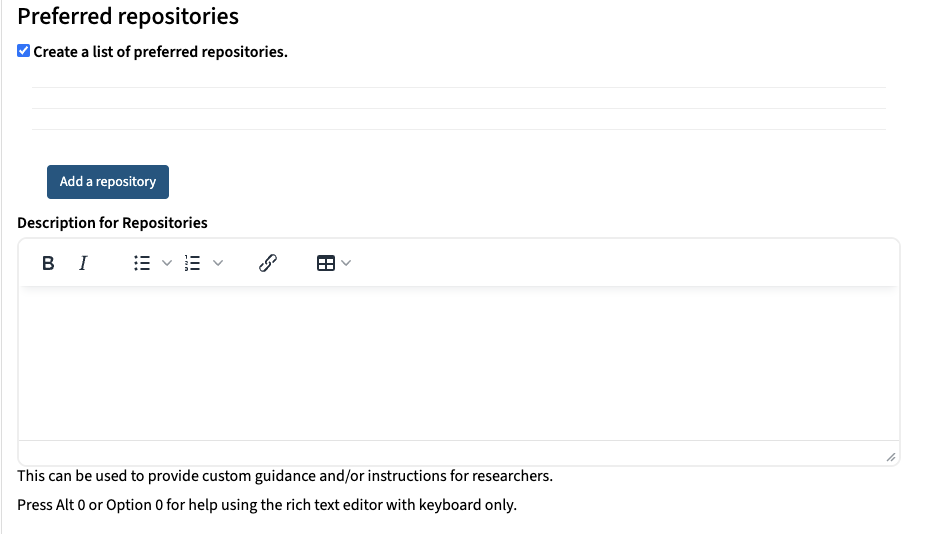
2. Customize Available Repositories: The current list of nearly 3,500 repository entries can be overwhelming for researchers. This update allows administrators to refine this list, helping guide researchers toward specific repositories as mandated by funders or institutional requirements. Additionally, DMPTool administrators can add descriptive text to the repository that provides additional information to help researchers select or utilize these resources. 

3. Customize Metadata Standards and License Types: In the same vein as repository customization, this update allows for the customization of metadata standards and license types. 

4. Tooltips: This update introduces tooltips on fields in the Research Outputs section, allowing administrators to provide additional guidance for repositories, metadata standards, and licenses. This text will be displayed as a tooltip to the researcher adjacent to the field, enhancing the clarity of information.

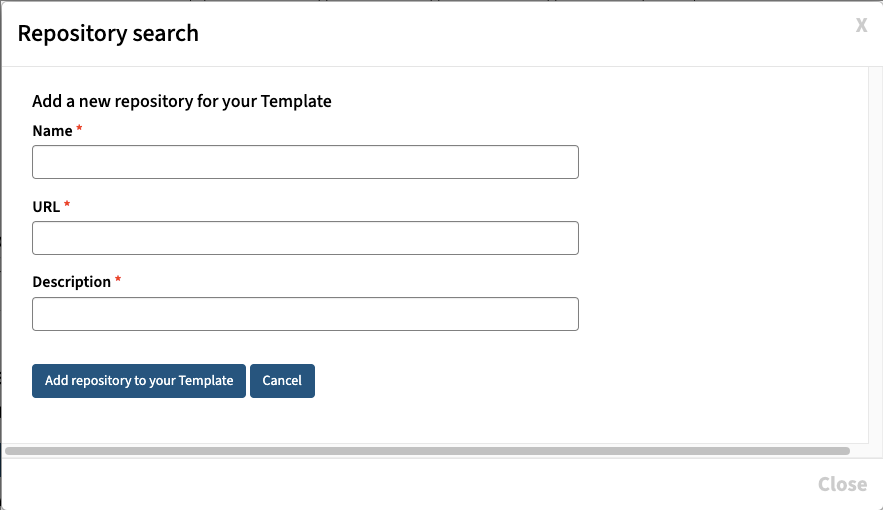
5. Define Custom Repositories: Administrators can now add custom repositories to their preferred repository list. This feature allows admins to record the name, description, and homepage URL of custom repositories.

DMPTool Administrators can add repositories not included in the re3data registry. These repositories will be included in the local index for all DMPTool users. 

6. Remove the Research Outputs Tab from a template: In response to feedback from administrators who noted duplication in information capture, we’ve added the ability to turn off the Research Outputs tab. This can be useful when using older templates that already ask users to provide comprehensive information about their anticipated research outputs.

We appreciate the continuous feedback from our users, and we hope these enhancements will provide a more streamlined, efficient experience for administrators and researchers alike. We invite you to explore these new features and share your feedback with us. 

Latest DMPTool Release 

The DMPTool team is hard at work developing a suite of new features to facilitate the creation of optimized and structured DMPs. In response to growing federal mandates for data sharing, the DMPTool is focused on supporting these new policies by exposing the information contained within a DMP in a machine-readable format to facilitate tracking research projects as they progress through the research lifecycle. Two National Science Foundation EAGER grants have supported this research: the first for DMP Roadmap: Making Data Management Plans Actionable and the second for the ongoing FAIR Island project. Additionally, it has received support from the Templeton World Charity Foundation as part of the FAIR Workflows project.

This latest DMPTool release includes several updates focused on UX improvements and streamlining workflows.

New Follow-up tab 

Follow-up tab to update funding status & link research outputs

This new tab on the Create Plan workflow allows plan creators (or administrators with permission to modify a plan) to add information about funded projects. The new fields include the funding status and a grant number or ID. This tab will only appear on plans that have associated DMP-IDs.

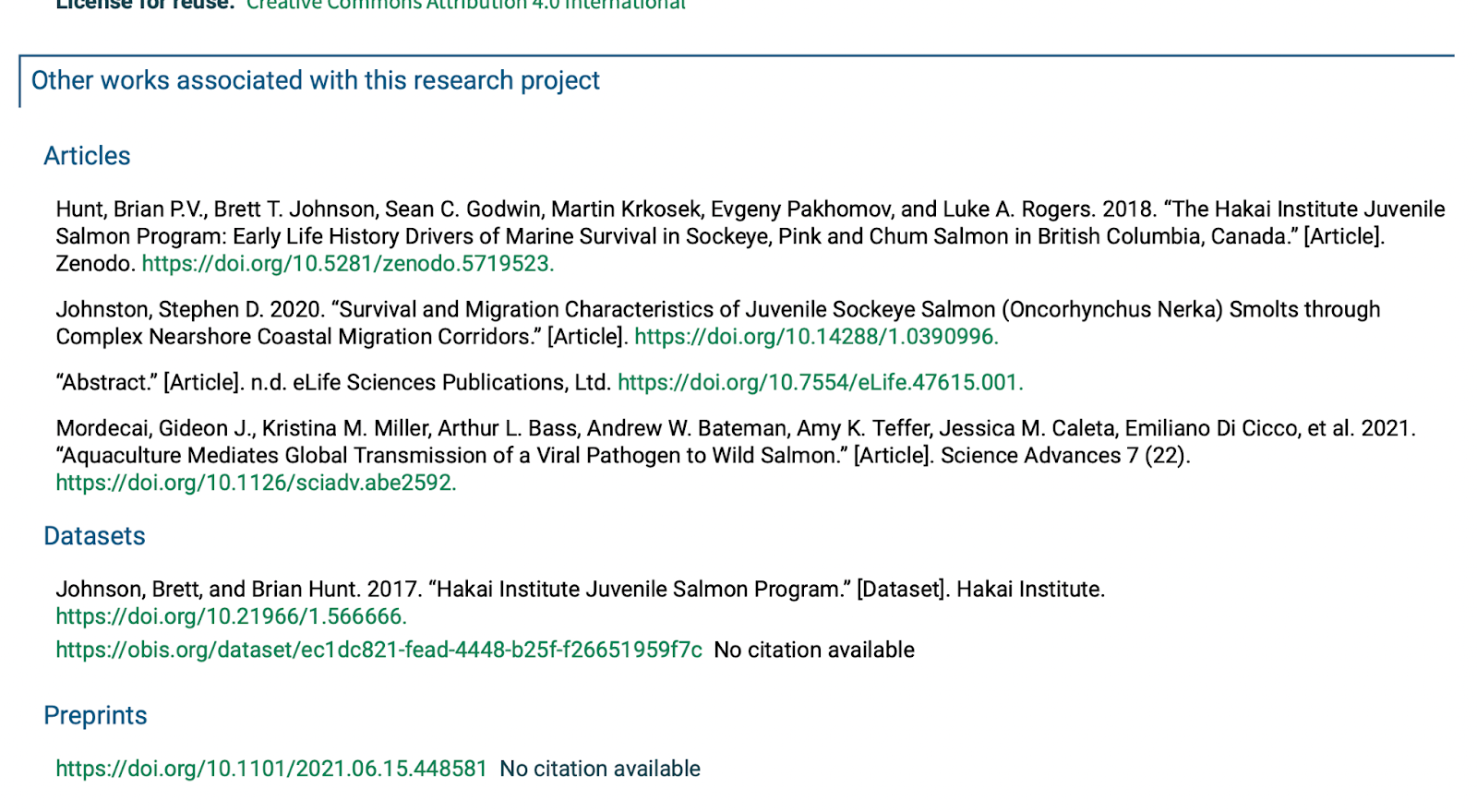
A new section allows users to connect Research Outputs from their work to their associated DMP. Research Outputs can be anything related to a project with a DOI or other URL-based identifier. For example, a project output could be a dataset, protocol, or software connected to a research project. 

These research outputs will be recorded in the metadata of the DMP-ID as a related identifier and passed back to DataCite. By submitting updated metadata to DataCite, this workflow facilitates tracking scholarly outputs and is openly available for consumption and ingest by other systems.

UX changes to the Finalize tab

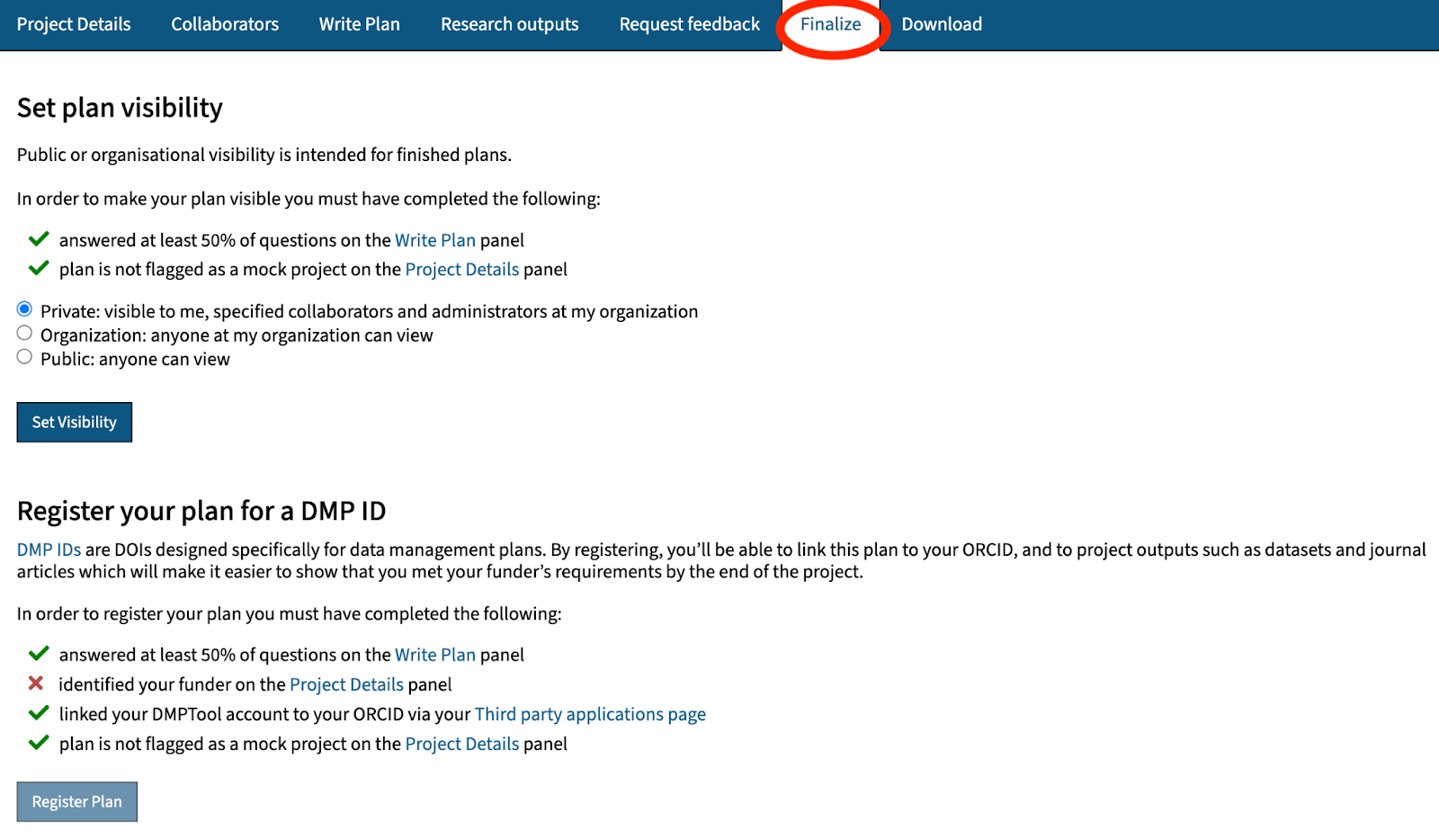
In response to user feedback, we have streamlined the UI to clarify what a researcher needs to do to get a persistent identifier for their DMP and why they would want to do this.  UI changes include: 

  • New plan text language explains what a DMP-ID is, what identifiers do, and why they should get one for their DMP. 
  • The “Register” button is present but disabled if the preconditions are not met. 
  • Moved the Finalize tab to before Download to better reflect the logical workflow of creating a DMP. 

Improved DMP-ID Landing Page Design

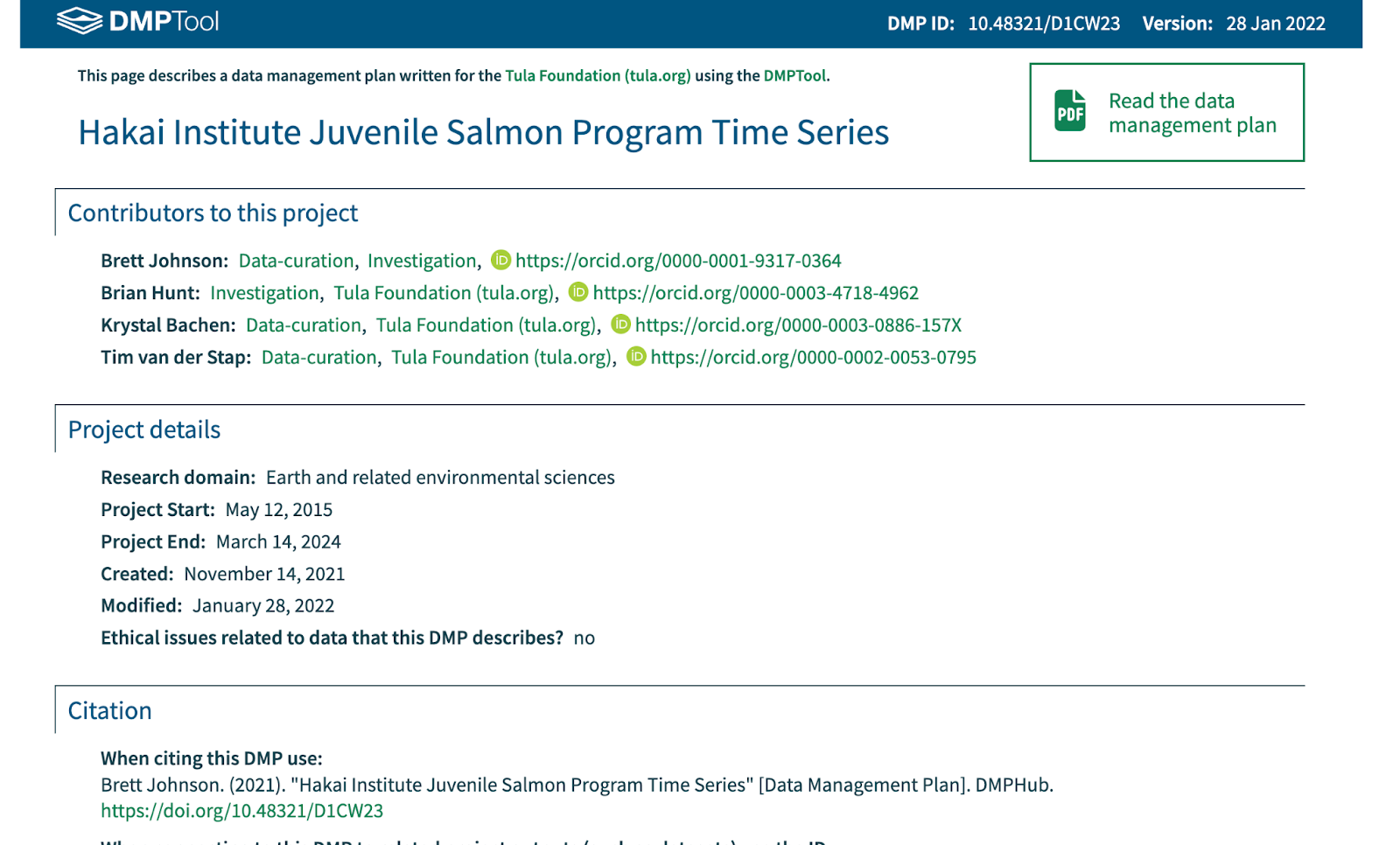
Based on user feedback, we have redesigned the DMP-ID landing page for improved accessibility and to make it clear where a user can view a PDF version of a plan. This redesign also allows us to build new plan versioning features in the coming months. 

Sample DMP-ID Landing Page with a link to the full-text narrative 
Example of Project Outputs as they appear on the DMP ID landing page

Other miscellaneous updates & bug fixes included in this release

  • Research Outputs now appear in the CSV and TXT versions #406
  • Fixed an issue that was causing the DOCX version of the plan from displaying an error in MS Word when opening the document
  • Fixed an issue with the sans-serif font used in PDF generation. Switched from Helvetica (which is no longer downloadable for free) to Roboto and also updated spacing between questions/sections.
  • Fixed an issue that was preventing an institutional admin from adding more than one URL/link on the Org Details page #413 #405
  • Fixed an issue that was preventing associated research outputs from being deleted #372
  • Fixed an issue with the emails sent out after the plan’s visibility changes #416
  • Other updates are detailed in the release notes.

How to get involved

We welcome contributions or collaborations. For those interested in following our work’s technical development, please see our GitHub project board. Please contact us if you have suggestions or ideas for pilot partnerships or if you’re interested in being an early tester.

Updates on DMPTool Support for the NIH DMSP Requirements 

A few months back, we announced a new DMPTool NIH Template Working Group focused on supporting the upcoming NIH requirements for data sharing. Since then, this hard-working group, chaired by Nina Exner of Virginia Commonwealth University, has collaborated to develop several new resources for the community. 

Updated NIH-GEN Template

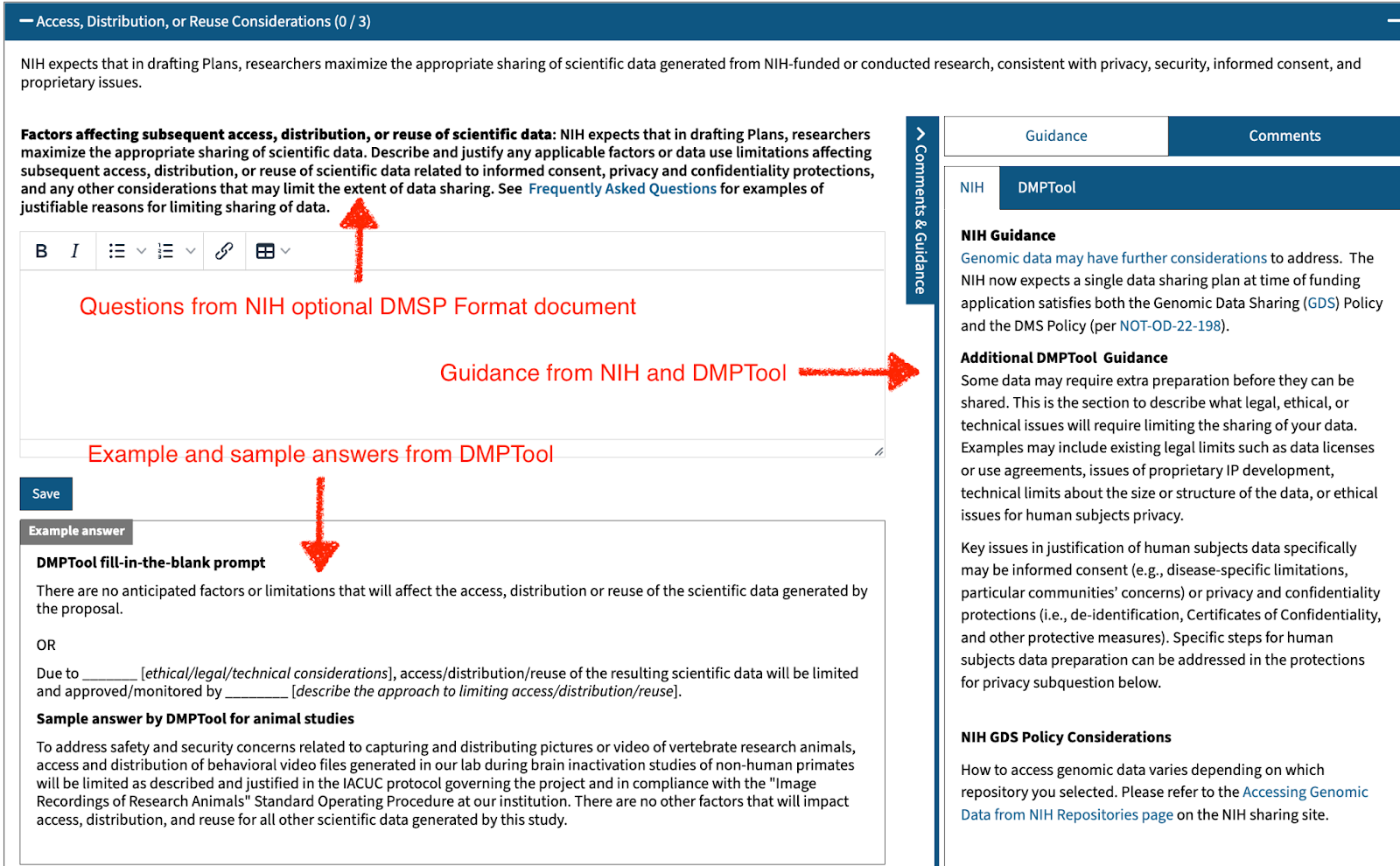
The updated NIH-GEN DMSP (forthcoming 2023) template (v6) follows the structure laid out by the NIH in the optional DMS Plan format and aligns with the NIH-recommended Elements of a DMS Plan. The DMPTool NIH Template Working Group augmented NIH notices and other policy documents with additional sample language and guidance designed to help researchers create DMS plans. The new NIH-GEN DMSP (forthcoming 2023) template also includes guidance for data covered under the Genomic Data Sharing (GDS) policy, as NIH now expects a single data sharing plan to satisfy both the GDS Policy and the DMS Policy (NOT-OD-22-198). 

This new DMPTool NIH-GEN DMSP (forthcoming 2023) template includes answer prompts and sample answer text. 
The new NIH-GEN DMSP (forthcoming 2023) template includes answer prompts and sample answer text. 

Test out the new template by creating a plan. Or, preview the new template by downloading a PDF version with sample language and guidance included. 

DMPTool administrators can customize this (or any DMPTool template) and add institution-specific guidance and sample language. Instructions on how to customize templates and a short video tutorial are available. Any institutions with existing customizations will need to migrate to this new version of the template by publishing the template. Please see our documentation on the two steps required to transfer existing customizations. 

The DMPTool will depreciate the older NIH templates (NIH-GDS: Genomic Data Sharing and NIH-GEN: Generic (Current until 2023)) on January 24. Any plans with these older templates will still be available, but new plans for NIH will be directed to the new template. After we make this switch, the NIH-GEN DMSP (Forthcoming 2023) template title will change to NIH-GEN. 

New educational materials

The Education Sub-committee of the DMPTool NIH Template Working Group developed materials that institutions can use to promote the NIH requirements and use of the DMPTool. To support the increasing number of new medical centers and other institutions joining the DMPTool community, the Sub-committee produced a slide deck and flyers that institutions can utilize to train local researchers on using the DMPTool templates.

The Education Sub-committee also collaborated on a DMPTool training workshop held by the Network of the National Library of Medicine’s National Center for Data Services (NCDS). The first DMPTool workshop was held in December and broke attendance records. Betsy Gunia of Johns Hopkins led this training webinar, giving an excellent overview and DMPTool demonstration. 

If you missed this first session, never fear! A recording of this session is available via the NNLM, and Jim Martin of the University of Arizona is giving a repeat session on February 15. Registration is available via NNLM

Ongoing work

We will continue to iterate on the new templates, including the sample language and guidance provided, and welcome feedback from the community. As the NIH releases additional recommendations and guidance, we’ll continue incorporating these into NIH templates. As always, please reach out with any questions, suggestions, or feedback! 

Supporting the upcoming NIH data sharing requirements with the DMPTool

Immediately following the new NIH Policy for Data Management and Sharing (DMS) announcement, academic medical centers started to contact the DMPTool team with questions about how best to prepare for the pending policy change. These centers faced new and seemingly daunting requirements for managing and sharing biomedical data; fortunately, the DMPTool offers a simplified way of providing access to federal and local guidance regarding data sharing practices and features to connect researchers and data librarians. As a result, new medical centers join the DMPTool community every week. 

The need for the DMPTool arose in 2011, as transformative requirements for data management plans (DMPs) for NSF proposals began to take shape. In light of the upcoming policy changes for NIH research and the DMS plan requirement, we thought it would be helpful to highlight the work the DMPTool community is doing to help address the needs of the NIH research community.

Community supported work

Given that the DMPTool is based out of the University of California, it seemed fitting that we begin work supporting the NIH policy changes in collaboration with data librarians from the UC system. Our group included librarians from UC Berkeley, UC Irvine, UC San Francisco, and honorary UC, Stanford. The informal Working Group (WG) gathered to develop and share language for a generic NIH template and an FAQ document addressing questions the librarians had fielded thus far regarding the policy. This collaboration resulted in adding sample text language for each of the questions asked by the NIH. There were a few areas where the group found the NIH requirements needed more clear explanations, so as a result, the WG  also developed plain language where necessary.  

Following this work on the generic NIH DMP template, Nina Exner from Virginia Commonwealth University brought up the need for revising templates as guidance comes out of the NIH, and assessing the need for individual templates for specific NIH Centers and Institutes (IC). NIH has stated that while the overarching policy is the “minimum,” “ICs may supplement the DMS Policy as appropriate.” 

Several NIH ICs have released specific requirements on top of the overarching policy, and we expect additional new IC policies as we get closer to January 25, 2023, the effective date. Exner spearheaded a WG of data librarians to analyze IC policies and develop templates for ICs with different or more restrictive DMS policies when necessary.  Some ICs may not require the development of individual templates, and the WG will make this assessment. There are twenty-seven ICs, so composing individual templates for each necessitates this community effort. 

The WG is also using their experience with researcher needs to craft expanded example language for different disciplines. The new policy affects all disciplines, from basic sciences to clinical and biobehavioral, and the WG wants to help researchers see how the new Plan format connects to their disciplines. With this growing need for NIH templates, we also have a growing need for training. To support the increasing number of new medical centers joining the DMPTool, the WG is developing educational materials to support institutions that want to train local researchers on using the DMPTool templates. We are grateful to the NIH DMP Working Group for taking on this work and creating a valuable set of templates for the larger DMPTool community to utilize.

Ongoing work

The DMPTool has been a community-supported tool from inception, and the new NIH requirements highlight the need for ongoing support to keep the DMPTool up to date with policy changes. The WG is now focused on building and updating the NIH DMP templates and will publish them as work is completed. In recent weeks, NIH has announced implementation details for the DMS policy, including an optional DMS format page and harmonized genomic data sharing requirements, as well as the new FORMS-H grant application forms that will incorporate a new DMS plan section. The DMPTool NIH WG is now adding these to the template. 

How to access the templates

The NIH Generic template with community-developed guidance and sample language is available in the DMPTool by logging in and selecting the “NIH-GEN DMSP (Forthcoming 2023) template” from the Create Plan section. 

Screenshot of selecting the NIH-GEN DMSP (Forthcoming 2023) template in the DMPTool

We will continue to blog on our work as it continues and share the individual IC templates as they are published. Please reach out with any feedback, comments, or suggestions!

Members of the initial UC/Stanford Working Group

  • Anna Sackmann, University of California, Berkeley
  • Ariel Deardorff, University of California, San Francisco
  • Erin Foster, University of California, Berkeley
  • John Borghi, Stanford University
  • Wasila Dahdul, University of California, Irvine

Members of the current NIH DMP Working Group

  • Amy Yarnell, University of Maryland, Baltimore
  • Betsy Gunia, Johns Hopkins University
  • Genevieve Milliken, NNLM National Center for Data Services
  • Jim Martin, University of Arizona
  • Katy Smith, Saint Louis University
  • Lesley Skalla, Duke University Medical Center Library
  • Matt Covey, The Rockefeller University
  • Megan O’Donnell, Iowa State University
  • Megan Potterbusch, George Washington University
  • Melissa Ratajeski, University of Pittsburgh
  • Nina Exner, Virginia Commonwealth University
  • Seonyoung Kim, Washington University School of Medicine in St. Louis
  • Wasila Dahdul, University of California, Irvine
  • Will Dean, Temple University

Things to know about the updated DMPTool website

DMPTool Home Page

We’re starting 2022 with updates to the DMPTool website designed to make using the site easier and more efficient. 

Improved authentication process. We’ve streamlined the authentication process. A user enters their email address, and the system will automatically direct them to the next step. This new process avoids some complexity in the process, which is due to the fact that about half of our users use SSO for authentication and the other half manage their credentials. 

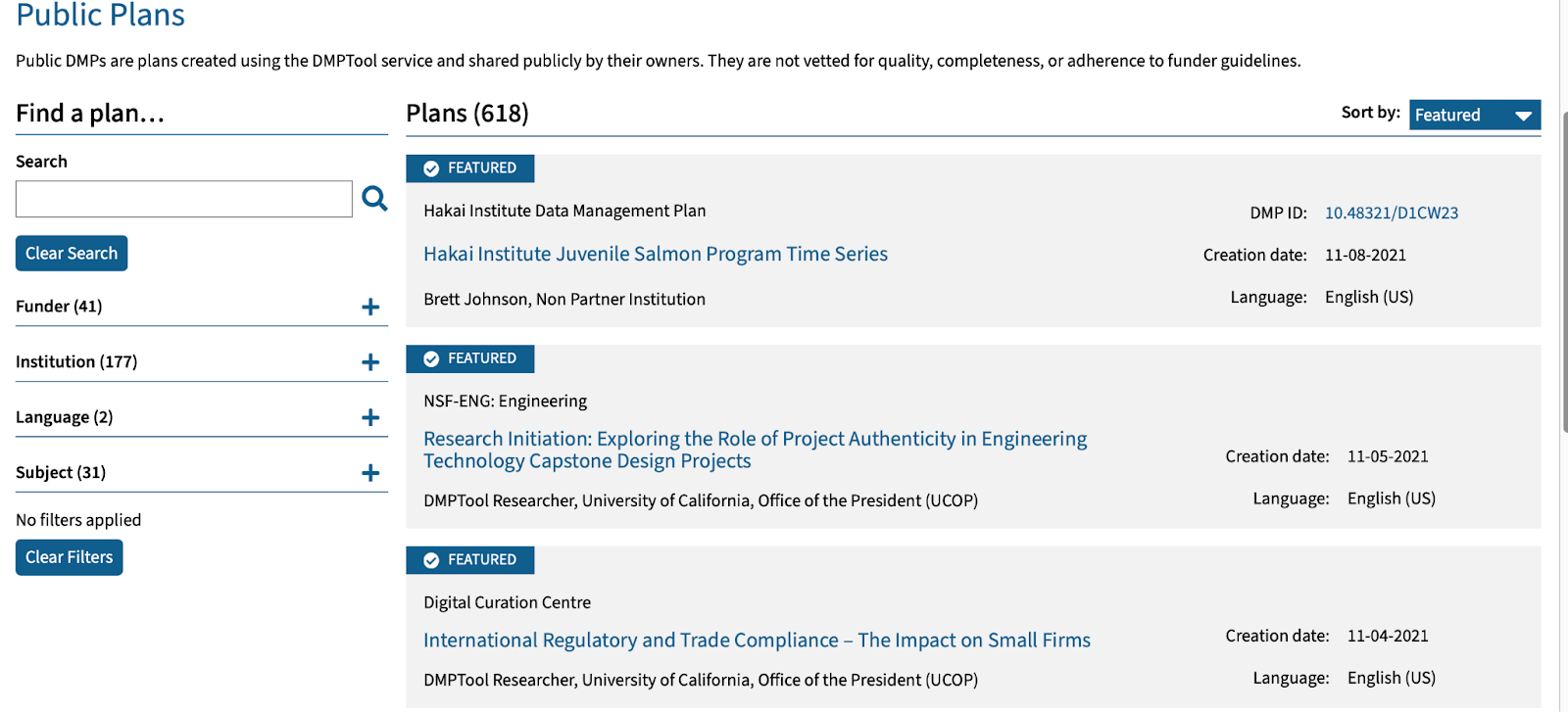
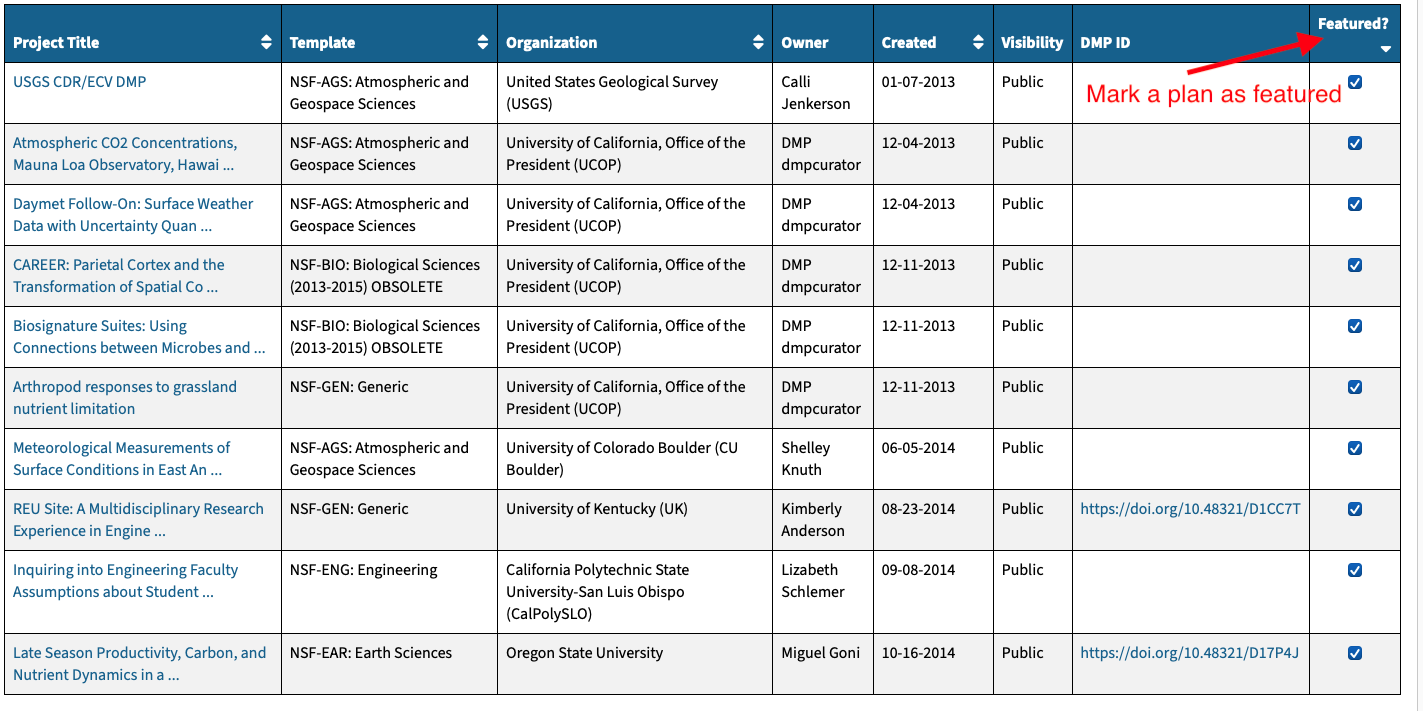
New Public Plans page search functionality Discovering sample DMPs just got a lot easier. The new public plans listing includes faceted search functionality to narrow results by Funder, Institution, language, and Subject. Additionally, DMPTool Administrators can now flag a plan as “Featured.” Featured plans are automatically displayed at the top of the page and provide a simple way to highlight exemplars. 

If you have plans in your organizational account that you think would be useful to the community, please consider requesting that the plan owner make them public and then flagging them as “Featured.” We hope to build a listing of exemplar DMPs to help showcase best practices and serve as educational aids for those writing their first plans. Of course, we’ll need your help to do this, so I’m hoping we can build on this together as a community by flagging exemplars as “Featured.” 

New Public Plans listing page with improved tools for discovery.
DMPTool Admins can mark public plans from their organization as “Featured.”

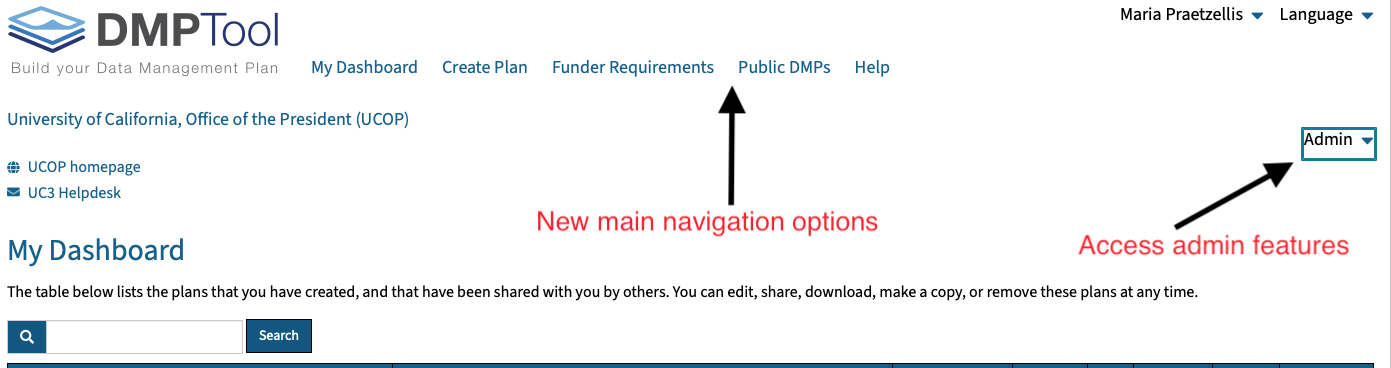
Navigation updates Admins will notice a change to the administrative functions drop-down list. Administrative functions are now located in the top right-hand of the page. 

Updated navigation points.

Please see our detailed Release Notes for a complete list of all the changes and new features. 

If you have any questions or comments, please contact us

Supporting FAIR Data with Integrations

As part of our work to extend the usability and interoperability of the new Networked DMP, we have partnered with Research Space (RSpace), a connected electronic lab notebook, and developed a prototype integration that allows users to track research data throughout the research life cycle. This new integration enables tri-directional data flows between RSpace, DMPTool, and data repositories, facilitating higher quality and more comprehensive research data capture and tracking.

The lack of interoperability between tools is arguably the most significant barrier to streamlining workflows throughout the research lifecycle. This gap prevents the comprehensive collection and incorporation of research data and metadata into the research record captured during the active research phase. Furthermore, it limits the scope for passing this data and metadata on to data repositories, thus undermining FAIR data principles and reproducibility. Bridging this gap is precisely what the integration seeks to address. 

Researchers are now able to reference and update their DMPs from within RSpace. The aims of this feature are:

  1. To add value to DMPs to link to datasets generated throughout a study and become ‘living documents.’
  2. Reduce the burden on researchers in keeping their DMPs up to date.
  3. Append DOIs and links to datasets exported from RSpace to a repository to be associated with a DMP.

Learn More

To see this workflow in action, check out this short demo from FORCE 2021, where Julie Goldman from the Harvard Medical School explains how the DMPTool – RSpace – Dataverse workflow enhances research data capture in the Harvard environment. The user documentation also contains a walk-through of the feature with instructions. 

Additionally, an upcoming FORCE11 Community Call on January 25, 2022, will showcase this and other integrations and demonstrate ways in which data capture and reproducibility are enhanced by tool interoperability.  

Please reach out with any comments, suggestions, or ideas for future integrations!

Announcing the FASEB Dataworks! Data Management Plan Challenge

Crossposted from the FASEB website

Biomedical and biological researchers writing data management plans frequently ask for examples of excellent DMPs that incorporate their data types and specific storage, access, and IP requirements. To respond to this need, and to celebrate excellence in managing and sharing biomedical and biological data, FASEB announces the DataWorks! Data Management Plan Challenge.

We are seeking DMPs that incorporate image data types, human subjects data, and big data into a template based on the 2023 NIH Data Management and Sharing Plan Requirements (NOT-OD-014). We invite you to amend your existing DMP or create one specifically for this competition for a chance to win one of 10 Outstanding NIH DMSP awards, each of which includes a prize of $500. 

The competition is a joint initiative with DMPTool, the Research Data Access and Preservation Association, and the Network of National Libraries of Medicine.

How to Enter

Rules for Submission

  • The DMP must describe a current or past biological or biomedical research project that uses or generates images or human subjects data and generates big data. 
  • The DMP must use the FASEB DataWorks! template in the DMPTool. You will need to register for an account (it’s free) to access the template.
  • The DMP should be in English no more than two single-spaced pages in length.
  • The DMP must be prepared using the DMPTool and made publicly available online. 
  • DMP Challenge submissions must use the FASEB submissions form and include a DMP-ID generated through the DMPTool.
  • The author(s) must complete the submission form by 11:59 pm EDT January 31.

Because of legal restrictions beyond our control, while anyone submitting a DMP will be considered for an award, the monetary component of the award is only available to participants who are eligible to work in the United States.

Evaluation

Valid submissions will be reviewed by a panel of expert judges, guided by a DMP rubric based on the Belmont Forum and DART Project, and aligned with the NIH Policy for Data Management and Sharing requirements.  We expect to notify the winners via email by March 1 and publicly announce them at the March DataWorks! Salon and on our website and social media. Contact the Challenge organizers with any questions.

The evaluation rubric is available here.

Our panel judges are:

  • Nicole Contaxis, MLIS, Data Librarian and Lead, NYU Data Catalog, New York University Health Sciences Library
  • Ariel Deardorff, MLIS, Data Services Librarian, University of California San Francisco 
  • Nina Exner, PhD, Research Data Librarian and Associate Professor, Scholarly Communications and Publishing, Virginia Commonwealth University
  • Lisa Federer, PhD, Data Science and Open Science Librarian 
  • Carrie Iwema, PhD, Coordinator of Basic Science Research Support, Health Sciences Library System, University of Pittsburgh 
  • Genevieve Milliken, MSLIS, Data Services Librarian, New York University Health Sciences Library
  • Elizabeth Suelzer, MLIS, Scholarly Communications Librarian, Medical College of Wisconsin

FAIR Island Project Receives NSF Funding

FAIR Island

Crossposted from the FAIR Island website

The California Digital Library (CDL), University of California Gump South Pacific Research Station, Berkeley Institute for Data Science (BIDS), Metadata Game Changers, and DataCite are pleased to announce that they have been awarded a 2- year NSF EAGER grant entitled “The FAIR Island Project for Place-based Open Science” (full proposal text). 

The FAIR Island project examines the impact of implementing optimal research data management policies and requirements, affording us the unique opportunity to look at the outcomes of strong data policies at a working field station. Building on the Island Digital Ecosystem Avatars (IDEA) Consortium (see Davies et al. 2016), the FAIR Island Project leverages collaboration between the Gump Station on the island of Moorea in French Polynesia (host of the NSF Moorea Coral Reef Long-Term Ecological Research site), and Tetiaroa Society, which operates a newly established field station located on the atoll of Tetiaroa a short distance from Moorea. 

The FAIR Island project builds interoperability between pieces of critical research infrastructure — DMPs, research practice, PIDs, data policy, and publications contributing to the advancement and adoption of Open Science.  In the global context, there are ongoing efforts to make science Open and FAIR to bring more rigor to the research process, in turn increasing the reproducibility and reusability of scientific results.  DataCite as a global partner in the project, has been working to recognize the importance of better management of research entities. This has led to critical advances concerning the development of infrastructure for Open Science. Increased availability of the different research outputs of a project (datasets, pre-registrations, software, protocols, etc.) would enable the reuse of research to aggregate findings across studies to evaluate discoveries in the field and ultimately assess and accelerate progress.

Key outcomes the FAIR Island team will develop include: 

  1. CDL, BIDS, and the University of California Natural Reserve System will work together to build an integrated system for linking research data to their associated publications via PIDs. We will develop a provenance dashboard from field to publication, documenting all research data and research outcomes derived from that data. 
  1. The project also facilitates further development of the DataCite Commons interface and extends connections made possible via the networked DMP that allows users to track relationships between DMPs, investigators, outputs, organizations, research methods, and protocols; and display citations throughout the research lifecycle.
  1. Developing an optimal data policy for place-based research by CDL, BIDS, and Metadata Game Changers is the cornerstone component of the FAIR Island project.  A reusable place-based data policy template will be shared and implemented amongst participating UC-managed field stations and marine labs. In addition, we will be incorporating these policies into a templated data management plan within the DMPTool application and sharing it with the broader community via our website, whitepapers, and conferences such as the Research Data Alliance (RDA) Plenaries.

The FAIR Island project is in a unique position to demonstrate how we can advance open science by creating optimal FAIR data policies governing all research conducted at field stations. Starting with the field station on Tetiaroa, the project team plans to demonstrate how FAIR data practices can make the reuse of data and the collaboration of data more efficient. Data Management Plans (DMPs) in this “FAIR data utopia” will be utilized as key documents for tracking provenance, attribution, compliance, deposit, and publication of all research data collected on the island by implementing mandatory registration requirements, including extensive use of controlled vocabularies, personal identifiers (PIDs), and other identifiers.

The project will make significant contributions to international Open Science standards and collaborate with open infrastructure providers to provide a scalable implementation of best practices across services. In addition, DataCite seeks to extend the infrastructure services developed in the project to their member community across 48 countries and 2,500 repositories globally. 

We will continue to share details and feature developments related to the FAIR Island project via our blog. You can join the conversation at the next RDA plenary in November 2021. Feedback or questions are most welcome and can be sent directly to info@fairisland.org