Announcing the DMPTool Webinar Series

All breeds welcome to the DMPTool Webinar Series! From Flickr by baldr90

As part of our grant from the Institute of Museum and Library Services, we are creating resources for librarians interested in promoting the DMPTool at their institutions. Based on input from a group of librarians back in February, we determined that a webinar series would be useful for introducing the tool, communicating how to use it effectively, and describing how it can be customized for institutional needs.

We are excited to announce our first webinar of the DMPTool Webinar Series on 28 May! We plan to present a webinar every two weeks on Tuesdays, with current plans for 12 webinars. The series will go into November 2013.

A few things to note:

  • All webinars will be recorded and made available for viewing.
  • The webinar schedule might change a bit depending on presenters’ availability.
  • We are always interested in new webinar ideas; please send them to uc3@ucop.edu, or comment on this blog post.
  • We plan to collect these webinars and make them available as a set. We then hope to create a short course in Data Management with the DMPTool that will offer certification for librarians as “DMPTool Experts” (we are still working on the title!).

Our current list of topics:

  1. Introduction to the DMPTool (scheduled for 28 May – pre-register now!)
  2. Learning about Data Management: resources, tools, materials you can use
  3. Customizing the DMPTool
  4. Environmental Scan: who’s important at your campus & how to talk to them
  5. Promoting services with the DMPTool; EZID as example (co-promote with EZID)
  6. Data curation profiles webinar (Guest presenter from Purdue)
  7. How to give the data management sales pitch to various audiences
  8. Digital humanities and the DMPTool 
  9. Other tools and resources that work with/complement the DMPTool
  10. Beyond funder requirements: more extensive DMPs (institutional versus funder requirements)
  11. Case studies 1 – how librarians have successfully used the tool (big university library with lots of resources)
  12. Case studies 2 – how librarians have successfully used the tool (small university library few resources)
  13. DMPTool Outreach Kit introduction 
  14. Certification program introduction

With all successful pursuits comes governance…

Following two years of collaboration and development of the DMPTool, it now seems the appropriate time to address the lingering questions of “who’s in charge of this thing?” and “what does it mean to be a Partner?”.  The DMPTool team is pleased to now introduce a formal collaboration agreement and set of operating principles to guide the continued efforts, enable broader community engagement, and facilitate collaboration with the data management community.  This seemed like a smart and necessary move as the service has seen users from over 650 institutions and continues to gain interest and diversity in application.  Additionally, this structure will dovetail nicely with the advisory organizations and community-building activities made possible through our current Alfred P. Sloan Foundation and IMLS grants.

Here are the highlights:

  • A DMPTool Steering Group will coordinate all technical, content, and community development activities.  This group will be comprised of DMPTool Partners who have made significant contributions to the DMPTool community and are eager to help guide it’s future.
  • DMPTool Partners will now be defined as institutions, corporations, individuals, or other groups who have signed the collaboration agreement, made the commitment to use the DMPTool technical and content framework via an authenticated connection, and contribute to the community in some other way as well.  We will be working to enroll institutions currently using the DMPTool over the course of the next month.
  • In the interest of building a stronger and more cohesive community, we will now accept new Partners via the following process:
    1. Express interest to the DMPTool Steering Group by writing uc3@ucop.edu.
    2. Sign the Collaboration Agreement and Memorandum of Understanding.
    3. Establish institutional authentication with the DMPTool.

While the Collaboration Agreement and Memorandum of Understanding is NOT a contract, it does serve as a set of common operating principles for the growth and operation of this service and community effort.  Until DMPTool2 is released, we will house the governance process information on the DMPTool BitBucket wiki pages here:  https://bitbucket.org/dmptool/main/wiki/Governance 

We hope that this new structure provides the community with a clear path for decision-making, opportunities for integration with other software and systems, and quite simply, a better-defined entity to affiliate with in order to build community.

The DMPTool team looks forward to your involvement!

-Andrew Sallans & Patricia Cruse, Co-Conveners of the DMPTool Steering Group


Library Outreach: Call for DMPTool Guides

Hello, everyone! My name is Dan Phipps. I’m coming to the DMPTool project from UCLA’s Graduate School of Education and Information Studies. My academic focus has been on informatics, especially the preservation and curation of disaster data. Aside from digitizing maps for the UCLA Digital Libraries project, I’ve also worked at the UCLA Social Science Data Archive to help researchers better archive their data.

I’m working with California Digital Libraries as part of the IMLS funded Librarian Outreach project. Our focus is going to be specific to librarians and the role they play in the development of data management plans. While this is a relatively new hat for some librarians to wear, there is already a lot of resources from data archivists, repository institutions, grant departments and other librarians. We’re hoping to use the DMPTool as both a data management resource as well as a hub for information specialists to find useful materials.

The management of data is a major undertaking for any institution, and involves support everywhere from IT departments to individual researchers to granting offices and beyond. Librarians, by training, are uniquely suited to work within this environment – it is a field that has been focused on providing people with knowledge and support for centuries. Data management and preservation is a relatively new area of focus, but one which will be more and more important in the coming years.

One of the major goals of the Libraries Outreach project is to provide librarians with easy access to educational materials. Over the next few weeks we’ll be highlighting Libguides, wikis, webpages, and other useful online resources that have made using or teaching the DMPTool easier. If there are any references you find particularly useful, please email me your suggestions.

-Dan Phipps

Kickoff Meetings for Newly Funded DMPTool Projects

Berkeley

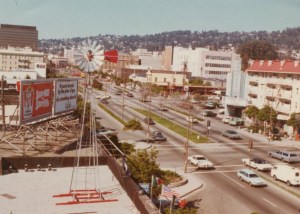
The meetings were held in Downtown Berkeley, near Durant Ave. This image of the area was taken in 1978. From Calisphere, contributed by Berkeley Public Library and Betty Marvin. Click for more information.

Two weeks ago, a meeting of the data management minds took place in Berkeley, California. There were two back-to-back meetings to kick off projects funded by the Alfred P. Sloan Foundation (read the blog post about it) and the Institute of Museum and Library Services. Here we provide a report of each meeting.

Alfred P. Sloan Foundation Project: “DMPTool2: Responding to the Community”

The primary goal of this project is to improve on the DMPTool (free, easy-to-use application that guides researchers through the process of creating data management plans). To accomplish this, we aim to build on the success of the tool to create DMPTool2, and use this improved version as a centerpiece for encouraging collaboration in data management efforts across all stakeholder groups (researchers, institutions, funders, libraries).  In support of the project goals, we convened a meeting of DMPTool partners to synchronize the project kickoff efforts and revisit our planned activities.  The meeting aimed to review:

  • Current DMPTool status
  • Community engagement plans
  • Functional development plans
  • Metrics for impact and success

Meeting participants were mainly from founding DMPTool institutions.  Over the course of the 1.5 day meeting, participants reviewed the course of the DMPTool thus far, the expectations and plans for the project, and then specific activities for the next 12 or so months.  Some highlights include:

  • Observations that the DMPTool has had significant use, but should to put increased emphasis on gaining repeat users and providing more value to users.  Underlying this point, while the team aims to address user needs and demands, it is important to still stress that the goal should be making data management planning EASIER, rather than just EASY.  Research data lives in a complex environment and this must not be underestimated.
  • Community engagement in coming months will be on many fronts.  Some include development of two advisory boards, one focused on administrative users and one on researchers.  The team will also implement the planned governance structure to give the user community greater access to and participation in future directions and ownership of the DMPTool; this will be in the very near term.
  • Functionality for this project ranges far and wide, but fits into two main broad categories:  functions for the researcher (ie. Writing plans, finding resources, getting advice, etc.) and functions for the administrative user (ie. Reporting on institutional use, adding institutional guidance, etc.).  The team will offer blog posts on specific technical elements, request feedback, and conduct user testing as the project moves along.  Expect first posts in coming weeks.
  • The last discussion of the meeting was around metrics for impact and success, what’s possible, what’s easy versus hard, and what matters to our different constituents.  We have many ideas in this area, and will have blog posts to outline some of these points and request feedback in coming weeks.

IMLS Grant Project: “Improving Data Stewardship with the DMPTool: Empowering Libraries to Seize Data Management Education”

The meeting funded by the IMLS grant took place over February 21-22. The primary goal of this project is to provide librarians with the tools and resources to claim the data management education space. In an effort to ensure the tools and resources developed meet the needs of librarians, we convened a meeting of DMPTool partners, as well as librarians from five University of California campuses. We had three goals for the meeting:

  1. Identify the resources most useful for helping librarians use the DMPTool for outreach.
  2. Prioritize resources based on user profiles and use cases.
  3. Create timelines and brainstorm dissemination tactics for resources to be developed.

Participants were primarily librarians, along with members of the DMPTool partner institutions. Over the course of the two day meeting, we discussed the barriers and solutions associated with using the DMPTool as a librarian, especially for outreach. Common themes emerged related to a lack of support and education, as well as limited resources including time, money, personnel, and institution-level services.  Poor communication among institutional partners and stakeholders was also often mentioned. The solutions proposed to eliminate these barriers became the template for potential products from the IMLS grant. Here we present a list of proposed outcomes and tasks for the project, i.e. things that will help librarians use the DMPTool effectively on their campuses:

  1. Checklist/talking points documents & brown bag kit for librarians to talk to campus partners and stakeholders, including researchers, VCRs, Special Projects/Grants offices,  IT, and other librarians
  2. Slide deck for presenting to researchers
  3. Promotional materials (posters, pamphlets, bookmarks, postcards, flyers) that can be customized for the institution
  4. Startup Kit for undergoing an environmental scan of institutional resources and services
  5. DMPTool Webinar Series for librarians
  6. DMPTool Screencasts for users, librarians
  7. A collection of case studies of institutions using the DMPTool successfully
  8. A collection data management success and horror stories
  9. A calendar of funder deadlines
  10. DMPTool Libguide

A larger outcome of the IMLS grant will be that we plan to set up an online common space that allows for sharing customization of tool, provides a forum for user conversation streams, provides access to materials developed by the grant project, and can be used as a platform for collecting use cases, success and horror stories. The list above is only a subset of the long list of suggestions that emerged from our meeting. Stay tuned into this blog for more updates as the project progresses.

Download the full IMLS meeting report